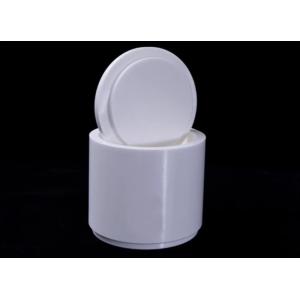
Sub-micron Surface Finish Nanoparticle Zirconia Precision Grinding
Jar High-density
Product Description
In the world of precision engineering, achieving a flawless finish
is not just a goal—it's a necessity. The demand for high-quality
components with superior surface finishes has led to the
development of advanced materials and technologies. Among these,
the sub-micron surface finish nanoparticle zirconia precision
grinding jar stands out as a revolutionary tool.
Zirconia, also known as yttria-stabilized zirconia (YSZ), is a
ceramic material renowned for its exceptional properties. It
combines high density, low porosity, and remarkable hardness,
making it an ideal choice for grinding applications. The zirconia
grinding jar is a cylindrical container used in various milling
processes to achieve ultra-fine grinding of materials. Its high
density and toughness allow it to grind materials that are too hard
for traditional options like agate or alumina.
- High Density: Zirconia has a specific density greater than 6.0 g/cm³, ensuring
efficient grinding with minimal contamination.
- Exceptional Hardness: With a hardness exceeding 10 GPa on the Vickers scale, zirconia
can handle the toughest materials.
- Chemical Inertness: Zirconia is chemically inert to most acids, including
hydrofluoric acid, making it suitable for applications requiring
low contamination.
- Thermal Resistance: Its ability to withstand high temperatures and thermal shocks
makes zirconia ideal for high-temperature applications.
The precision and low contamination levels of zirconia grinding
jars make them indispensable in the synthesis of nanomaterials. The
sub-micron surface finish achieved with these jars ensures that the
nanoparticles produced are uniform in size and shape, which is
crucial for applications in electronics, pharmaceuticals, and
advanced materials.
In forensic science, the ability to grind samples without
introducing contaminants is vital. Zirconia grinding jars provide
the purity needed for accurate analysis, ensuring that the results
are reliable and reproducible.
Zirconia's superior hardness allows it to grind tough ceramics and
metals, such as aluminum oxide and silicon oxide. This capability
is essential in industries that require precise component
fabrication, such as aerospace and automotive manufacturing.
The high density of zirconia grinding jars translates to more
efficient grinding processes. This efficiency reduces the time and
energy required to achieve the desired particle size, making it a
cost-effective solution for industrial applications.
Zirconia's toughness and wear resistance ensure that the grinding
jar remains intact even after prolonged use. This durability
extends the lifespan of the jar, reducing the need for frequent
replacements and maintenance.
The chemical inertness and thermal stability of zirconia grinding
jars make them suitable for a wide range of applications, from
high-temperature environments to sensitive biological samples. This
versatility ensures that zirconia jars can meet the diverse needs
of various industries.
Characteristics & Advantages:
| Feature | Zirconia Jar | Alumina Jar | Stainless Steel Jar |
|---|
| Hardness | ⭐⭐⭐⭐⭐ (1,200 HV) | ⭐⭐⭐ (1,500 HV but brittle) | ⭐⭐ (~500 HV) |
| Fracture Toughness | ⭐⭐⭐⭐⭐ (6-10 MPa·m¹/²) | ⭐⭐⭐ (3-4 MPa·m¹/²) | ⭐⭐⭐⭐ (High, but wears over time) |
| Chemical Resistance | ⭐⭐⭐⭐⭐ (Inert) | ⭐⭐⭐⭐ (Good) | ⭐⭐ (Corrosion risk) |
| Contamination Risk | ⭐ (None) | ⭐⭐ (Low) | ⭐⭐⭐ (Metal traces) |
| Lifespan | ⭐⭐⭐⭐⭐ (Longest) | ⭐⭐⭐ (Moderate) | ⭐⭐ (Wears fastest) |
Product Paramenters
Material selection of ball mill jar
The material of the ball grinding jar has no pollution to the grinding material and has no effect on the
appearance of the material after grinding
Types and requirements of grinding materials | Ball mill jar material selection reference |
Soil and materials that do not allow impurities | Agate ball mill jar |
Metal, non-metal do not allow to bring impurities into the material | Zirconia ball mill jar |
Diamond, carbide and other high hardness materials | Carbide ball mill jar |
Strong acid, strong base substances and high temperature conditions | Teflon ball mill jar |
Materials with low sensitivity to iron and steel minerals and
impurities | 304 stainless steel ball mill jar |
Pigment class, after the sequence can be high temperature treatment
class materials | Nylon ball mill jar |
Ceramic glaze and other aluminum-containing materials | Corundum ball mill jar |
Lithium and other electronic materials | Polyurethane ball mill jar |
Materials that are easily oxidized and require special atmosphere
protection | Vacuum ball mill jar |
Grinding Jar& Ball | Agate Ball | Zirconia Ball | TC-ball | Stainless Steel Balls | Alumina Balls | Polyurethane Covered Core Ball | Steel Ball |
Agate Jar | ▲ | | | | | | |
Zirconia Jar | | ▲ | | | | | |
TC-Jar | | ○ | ▲ | | | | |
PTFE Jar | ▲ | ○ | | | | | |
Stainless steel Jar | | | | ▲ | | | |
Nylon Jar | ○ | ▲ | | | | | |
Corundum Jar | | ○ | | | ▲ | | |
Polyurethane Jar | ○ | ○ | | ○ | | ▲ | |
Note:▲superior formulation, ○optimal formulation
Ball size ratio: Usually the best grinding ball ratio is 20% for
large ball, 50% for medium ball, 30% for small ball (weight ratio).
Factory equipment
Exhibition & Partner
Case
Ship to Portugal
Ship to Republic of Lithuania
FAQ
What safety precautions should I take when using a planetary mill
jar?
How do I store planetary mill jars when not in use?
What industries commonly use planetary mill jars?
They are used in pharmaceuticals, ceramics, chemicals, metallurgy,
and research laboratories for grinding, mixing, and sample
preparation.