
Add to Cart
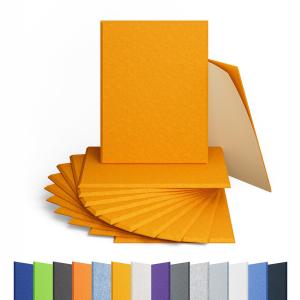
Polyester fiber panel 48 different colors are available for
customizing patterns
Wooden veneer PET soundproof wall panels stand out from other
soundproofing materials through a unique blend of acoustic
performance, aesthetics, and practicality. Here’s a detailed
comparison:
1. vs. Traditional Fiberglass/ Mineral Wool Panels
Acoustics: Both offer strong noise reduction, but PET panels (like
the wooden veneer version) often excel in mid-to-high frequencies
(125–4000Hz), critical for speech clarity and music—areas where
fiberglass can feel "muffled."
Aesthetics: Fiberglass panels are typically plain or require
covers, while wooden veneer PET panels double as decorative
elements with natural wood grain, eliminating the need for
additional finishes.
Safety: PET is non-irritating (no sharp fibers), unlike fiberglass,
which can cause skin/respiratory issues during installation.
2. vs. Solid Wood Panels
Weight & Installation: Solid wood is heavy, requiring reinforced
structures and longer installation times. Wooden veneer PET panels
are 50% lighter, cutting labor time by 25% and reducing transport
costs.
Durability: Solid wood is prone to warping in humidity, while PET
cores with bonded wood veneers resist peeling, fading, and
deformation—even in moist environments (e.g., hotels, kitchens).
Cost: Solid wood is pricier due to material and processing costs.
PET panels, with factory-direct pricing and less waste, save 15–20%
overall.
3. vs. Foam Acoustic Panels
Soundproofing Range: Foam focuses on absorption but struggles with
low-frequency noise. PET panels, with dense fiber cores, tackle a
broader frequency spectrum, including deeper sounds.
Longevity: Foam degrades over time (especially in heat/humidity),
while PET panels are durable with a 5-year warranty.
Sustainability: Foam is often non-recyclable; these PET panels use
100% recyclable materials, aligning with green building standards
(LEED).
4. vs. Mass-Loaded Vinyl (MLV)
Purpose: MLV blocks noise via density, but it is ugly and requires
hiding behind walls. Wooden veneer PET panels absorb and decorate,
making them ideal for visible spaces (offices, home theaters).
Flexibility: MLV is rigid and hard to customize. PET panels offer
shapes, sizes, and wood veneer/print options for unique designs.
In short, wooden veneer PET panels bridge the gap: they match or
exceed the acoustic performance of technical materials while
offering the beauty of wood and the practicality of lightweight,
sustainable, and customizable solutions—making them a versatile
choice for both functional and stylish spaces.